In Broad Daylight: Uyghur Forced Labour and Global Solar Supply Chains
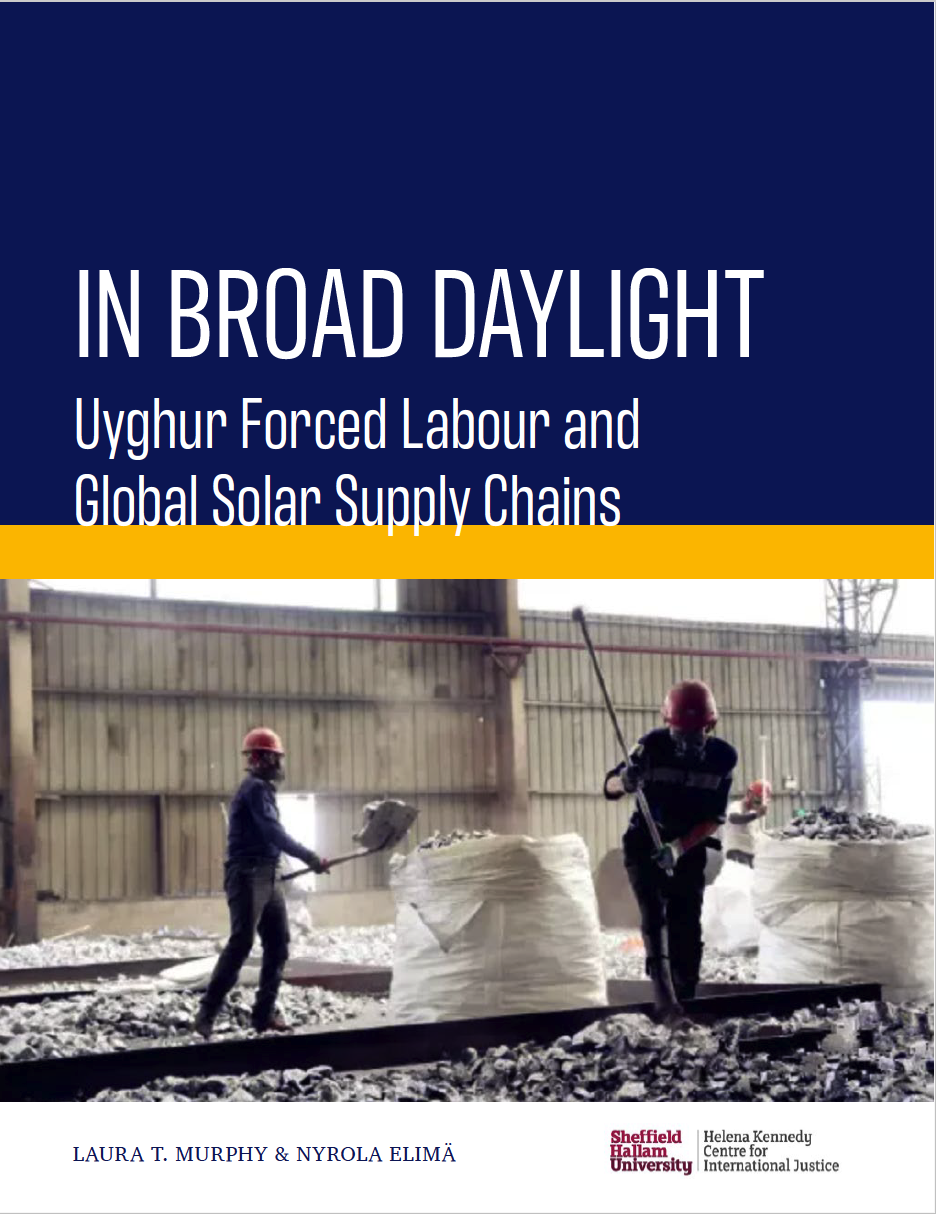
Beginning in the spring of 2018, significant evidence began to emerge that the government of the People’s Republic of China understood its system of over 380 detention and internment camps as merely one part of a massive transformation of the Xinjiang Uyghur Autonomous Region (XUAR or Uyghur Region) into a docile and lucrative economic hub. While continuing to intern people in camps without trial, local governments shifted their focus to the creation of an enormous forced labour regime. State-sponsored forced labour programmes are employed by companies both within Xinjiang and in the interior of China, affecting the supply chains of a wide variety of industries, including agriculture, electronics, textiles and apparel, sporting goods, and new energy.
Because of the growth of the polysilicon industry in the Uyghur Region, solar industry supply chains are particularly exposed to forced labour of Uyghur and other minoritized citizens. We analysed government documents, state and corporate media, and corporate disclosures to trace the solar module supply chain from quartz to module, revealing how our clean energy is reliant on state-sponsored forced labour.